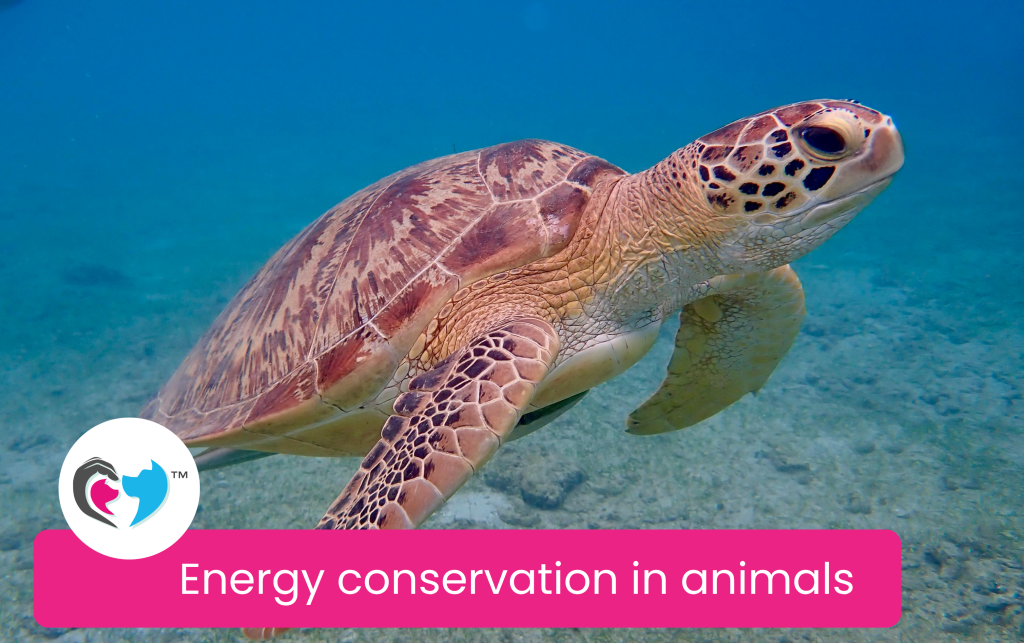
Turtles are some of the most remarkable examples of energy-efficient design in the animal kingdom. On World Turtle Day, we’re reminded that their survival strategy is not speed, strength, or defence — but something far more subtle and deeply behavioural: energy conservation.
Understanding how and why animals conserve energy gives us powerful insight into behaviour, welfare, and the decisions we make in captive environments. This is also a core theme explored in the Diploma in Animal Behaviour through COAPE International.
The turtle strategy: “do less, survive more”
Turtles are ectothermic (commonly called cold-blooded), meaning they rely heavily on external environmental temperatures to regulate their body processes. This biological constraint has shaped their behaviour over millions of years.
Instead of burning energy constantly, turtles:
- Move slowly to reduce metabolic cost
- Use basking behaviour to regulate body temperature
- Enter periods of inactivity or brumation when conditions are harsh
- Minimise unnecessary movement and respond only when needed
From a behavioural perspective, this is not “laziness” — it is highly adaptive energy budgeting.
Energy conservation is a universal behavioural principle
While turtles are a clear example, energy conservation is not unique to reptiles. It underpins behaviour across species:
- Predators alternate between intense bursts of activity and long rest periods
- Domestic cats sleep for long periods to conserve energy for hunting-like play
- Dogs regulate activity based on motivation, environment, and reinforcement history
- Even humans unconsciously conserve energy through routine and habit formation
Behaviour, at its core, is constantly shaped by a balance between energy expenditure and survival benefit.
Why this matters in animal welfare and behaviour work
In welfare settings — whether shelters, homes, or rehabilitation environments — animals are often placed under conditions that disrupt natural energy regulation.
Examples include:
- Overstimulation in kennelled dogs
- Lack of hiding/resting opportunities for fearful animals
- Inappropriate lighting or temperature for reptiles
- Chronic stress leading to energy depletion rather than recovery
When animals cannot regulate their energy effectively, we often see behavioural outcomes such as:
- Increased reactivity
- Withdrawal or shutdown
- Stereotypic behaviours
- Reduced learning capacity
Understanding energy conservation helps us recognise that behaviour is not just “what an animal does” — it is also how an animal manages its internal resources in response to its environment.
Linking this to behavioural education
The Diploma in Animal Behaviour through COAPE International explores these principles in depth, helping students understand:
- How biological systems influence behaviour
- How stress and arousal affect energy use
- Why behaviour must always be interpreted in context
- How to design environments that support welfare rather than drain it
This perspective is essential for anyone working in rescue, training, or behaviour consultation. It shifts the focus from “fixing behaviour” to understanding why the behaviour exists in the first place.
Turtles remind us that survival is not always about doing more — sometimes it’s about doing less, more efficiently, and at the right time.
In a world that often values constant activity, animal behaviour teaches us something different: energy is not unlimited, and behaviour is always economical.
This World Turtle Day, take a moment to appreciate the quiet intelligence of animals who have mastered the art of conservation — and consider how much we can learn from them in improving welfare and understanding behaviour more deeply.