For centuries, humans and animals have shared deep emotional bonds. Today, growing scientific evidence supports what many pet guardians already know instinctively: animals can have a profoundly positive impact on emotional wellbeing. From reducing stress and anxiety to providing companionship and purpose, pets can play an important role in supporting mental and emotional health.
Companionship and reducing loneliness
One of the most significant emotional benefits of pets is companionship. Loneliness is increasingly recognised as a major contributor to poor mental health, and companion animals can help reduce feelings of isolation by providing consistent social interaction and emotional connection (McConnell et al., 2011).
Dogs, cats, rabbits, birds, rats, and many other companion animals often become integral parts of the family unit. Their presence can provide comfort, routine, and emotional stability, particularly for individuals living alone, older adults, or those experiencing difficult life circumstances.
Research has shown that interacting with pets may increase levels of oxytocin — often referred to as the “bonding hormone” — while reducing cortisol, a hormone associated with stress (Beetz et al., 2012). These physiological responses may contribute to feelings of calmness and emotional security.
Stress reduction and emotional regulation
Many people report feeling calmer after spending time with animals, and there is strong evidence to support this experience. Simply stroking or interacting with a familiar animal can help lower heart rate and blood pressure, promoting relaxation and reducing stress levels (Allen et al., 2002).
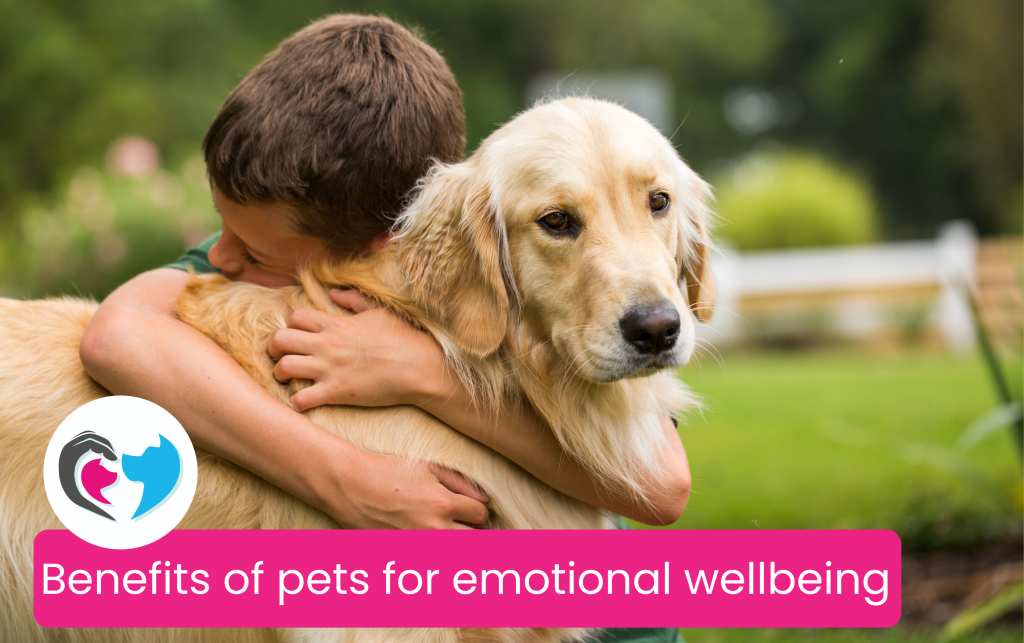
Animals can also help people regulate emotions during periods of anxiety or emotional overwhelm. Dogs, in particular, are highly attuned to human emotional states and often respond with affiliative behaviours such as seeking proximity or physical contact.
For children, pets may provide emotional grounding during times of change or stress. Learning to care for an animal can also encourage empathy, patience, and emotional awareness.
Encouraging routine and purpose
Caring for an animal introduces structure and routine into daily life. Feeding schedules, exercise, grooming, and enrichment activities encourage consistency and responsibility, which can be especially beneficial for individuals struggling with depression or emotional difficulties.
Dogs, for example, require regular walks and interaction, which can encourage physical activity and increased exposure to outdoor environments. Exercise itself is strongly associated with improved mood and reduced symptoms of anxiety and depression (Paluska & Schwenk, 2000).
Many pet guardians also describe their animals as giving them a sense of purpose. Feeling needed and responsible for another living being can positively influence self-esteem and motivation.
Social connection and community
Pets can also facilitate human social interaction. Dog walking, training classes, veterinary visits, and online pet communities often create opportunities for people to connect with others who share similar interests.
These social interactions may help reduce feelings of social isolation and encourage a greater sense of belonging. In some cases, companion animals act as “social catalysts,” helping initiate conversations and connections between strangers (Wood et al., 2015).
Supporting children’s emotional development
Children who grow up with animals may benefit emotionally and socially from these relationships. Positive interactions with companion animals have been associated with increased empathy, improved emotional understanding, and reduced stress in children (Purewal et al., 2017).
Pets can also provide non-judgemental companionship for children experiencing social difficulties, grief, or emotional challenges. Importantly, adult supervision and education are essential to ensure safe, respectful interactions between children and animals.
The importance of ethical pet guardianship
While pets can provide substantial emotional benefits, it is essential to recognise that companion animals are sentient beings with their own physical, emotional, and behavioural needs. Ethical guardianship involves providing appropriate nutrition, veterinary care, enrichment, social interaction, and species-specific welfare considerations.
Animals should never be acquired solely as “tools” for emotional support without careful consideration of the long-term responsibilities involved.
Choosing a pet whose needs align with an individual’s lifestyle, resources, and experience is vital for the wellbeing of both the human and the animal.
The relationship between humans and animals is complex, meaningful, and deeply enriching. Pets can offer companionship, emotional support, routine, comfort, and opportunities for connection that positively influence emotional wellbeing.
As our understanding of animal behaviour and human-animal relationships continues to grow, it becomes increasingly clear that the bond we share with companion animals is far more than simple ownership — it is a dynamic relationship capable of supporting emotional health and improving quality of life for both species.
References
Allen, K., Blascovich, J., Mendes, W. B., & Tomaka, J. (2002). Cardiovascular reactivity and the presence of pets, friends, and spouses: The truth about cats and dogs. Psychosomatic Medicine, 64(5), 727–739.
Beetz, A., Uvnäs-Moberg, K., Julius, H., & Kotrschal, K. (2012). Psychosocial and psychophysiological effects of human-animal interactions: The possible role of oxytocin. Frontiers in Psychology, 3, 234.
McConnell, A. R., Brown, C. M., Shoda, T. M., Stayton, L. E., & Martin, C. E. (2011). Friends with benefits: On the positive consequences of pet ownership. Journal of Personality and Social Psychology, 101(6), 1239–1252.
Paluska, S. A., & Schwenk, T. L. (2000). Physical activity and mental health: Current concepts. Sports Medicine, 29(3), 167–180.
Purewal, R., Christley, R., Kordas, K., Joinson, C., Meints, K., Gee, N., & Westgarth, C. (2017). Companion animals and child/adolescent development: A systematic review of the evidence. International Journal of Environmental Research and Public Health, 14(3), 234.
Wood, L., Martin, K., Christian, H., Houghton, S., Kawachi, I., Vallesi, S., & McCune, S. (2015). The pet factor — Companion animals as a conduit for getting to know people, friendship formation and social support. PLOS ONE, 10(4), e0122085.