
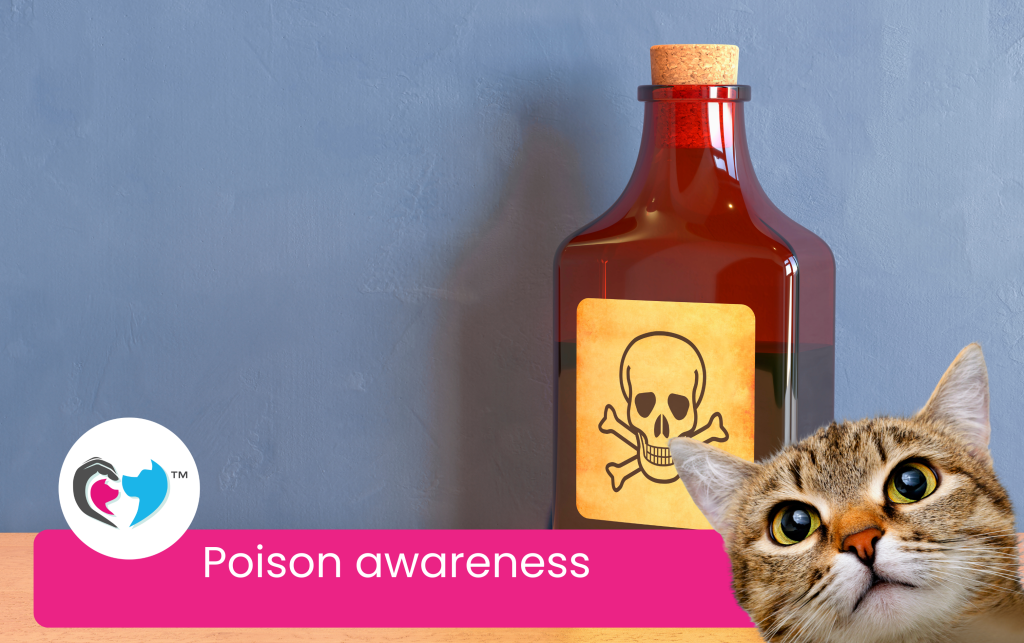
Poisoning is one of the most common preventable emergencies affecting companion animals. Every year, thousands of dogs and cats are treated for accidental toxin exposure, many of which occur within the home environment (ASPCA Animal Poison Control Center, 2023).
As animal professionals and responsible guardians, awareness, prevention, and early intervention are critical components of safeguarding animal welfare.
At COAPE International, we emphasise that behavioural understanding and environmental management are inseparable from physical health. Many poisoning incidents are not random accidents; they are linked to natural exploratory behaviours, stress responses, scavenging tendencies, or environmental mismanagement. Prevention therefore requires both education and behavioural insight.
Why pets are vulnerable to poisoning
Dogs are particularly vulnerable due to scavenging instincts and indiscriminate eating behaviours. Certain breeds and individuals demonstrate heightened food motivation or pica-related tendencies. Cats, while generally more selective, are uniquely sensitive to specific toxins due to metabolic differences in liver enzyme pathways, particularly glucuronidation deficits (Merck Veterinary Manual, 2023).
Young animals are at increased risk due to curiosity and oral exploration. Additionally, stress, boredom, and lack of enrichment may increase destructive or investigative behaviour that leads to toxin exposure.
Common household poisons
1. Human foods
Several common foods are toxic to pets:
Even small amounts of xylitol can cause life-threatening hypoglycaemia within 30 minutes (ASPCA APCC, 2023).
2. Medications
Both prescription and over-the-counter medications pose significant risk:
Medication toxicity often occurs when pets ingest dropped tablets or access unsecured pill containers.
3. Household chemicals
Ethylene glycol is especially dangerous; even small amounts can cause fatal kidney failure within 24–72 hours (Merck Veterinary Manual, 2023).
4. Plants
Many ornamental plants are toxic, including:
Lilies are particularly dangerous; ingestion of even small amounts of pollen can cause acute kidney failure in cats (International Cat Care, 2022).
5. Environmental and intentional poisoning
In some regions, malicious poisoning using pesticides or laced food remains a serious concern. This highlights the importance of community awareness and responsible chemical control.
Recognising signs of poisoning
Clinical signs vary depending on the toxin but may include:
Behavioural signs such as sudden agitation, hiding, confusion, or hypersensitivity may be early indicators. Prompt veterinary intervention significantly improves prognosis.
What to do if poisoning is suspected
Inappropriate home remedies can worsen outcomes. Activated charcoal and emetics should only be administered under veterinary guidance.
In some countries, dedicated poison control helplines are available, such as the ASPCA Animal Poison Control Center in the United States. Guardians should identify local emergency numbers in advance.
Prevention strategies
1. Environmental management
Environmental management is a behavioural strategy: when access is restricted, risk decreases.
2. Behavioural enrichment
Dogs that scavenge excessively may benefit from:
Behavioural training reduces opportunistic ingestion and promotes safer environmental navigation.
3. Education of household members
All family members should understand:
Clear communication prevents accidental exposure.
4. Community awareness
Animal professionals can contribute by:
Education reduces emergency cases and strengthens responsible ownership.
The link between behaviour and toxic exposure
It is important to recognise that some poisoning cases are secondary to stress or unmet needs. Dogs experiencing separation anxiety, confinement stress, or environmental frustration may chew and ingest inappropriate substances. Behaviour assessment should therefore form part of post-incident evaluation.
Understanding the emotional drivers behind ingestion behaviours allows professionals to design prevention strategies beyond simple restriction.
Seasonal poison risks
Certain toxins are seasonal:
Proactive seasonal education campaigns are an effective public relations strategy for shelters and behaviour professionals.
Poisoning remains one of the most preventable yet life-threatening risks facing companion animals. Through education, environmental management, behavioural understanding, and rapid response, many cases can be avoided.
At COAPE International, we advocate for integrated welfare approaches where behavioural science, environmental management, and public education intersect. Prevention begins with awareness—and awareness begins with education.
By equipping guardians and professionals with accurate knowledge, we reduce suffering, prevent emergencies, and promote responsible, compassionate animal care.
References
ASPCA Animal Poison Control Center (2023). Toxicology data and common household hazards.
International Cat Care (2022). Lily toxicity in cats.
Merck Veterinary Manual (2023). Toxicology: Small animal poisoning.